

- Google said it met electricity demand with 100% renewable electricity matching, mainly through PPAs and other renewable agreements
- On-site generation remained minimal at just 0.02 TWh, or about 0.05% of total supply
- Scope 3 emissions climbed to 11.6 million tCO2e, up 25% from 2024 and 62% from 2019
The full impact of Google’s business operation was revealed last week (June 30), as part of the company’s eleventh and most recent annual environmental report.
Given Google’s AI-focus, the 117-page report focused heavily on the company’s aggressive data center buildout, with accompanying data highlighting the sheer scale of the company’s project portfolio.
Most notably, the report revealed that the company’s data center portfolio consumed an additional 11.8 TWh of electricity in 2025 when compared to 2024, representing an almost 39% year-on-year increase.
As part of its opening statement, Google recognized that although its AI infrastructure buildout is “currently accelerating faster than the grid is decarbonizing,” it remains committed to “scaling abundant and affordable clean power globally.”
Exponential growth
The annual cumulative electricity consumption of Google’s data center portfolio continues to grow exponentially, with the figure for 2025 exceeding 42 TWh, as illustrated below in Graph 1.
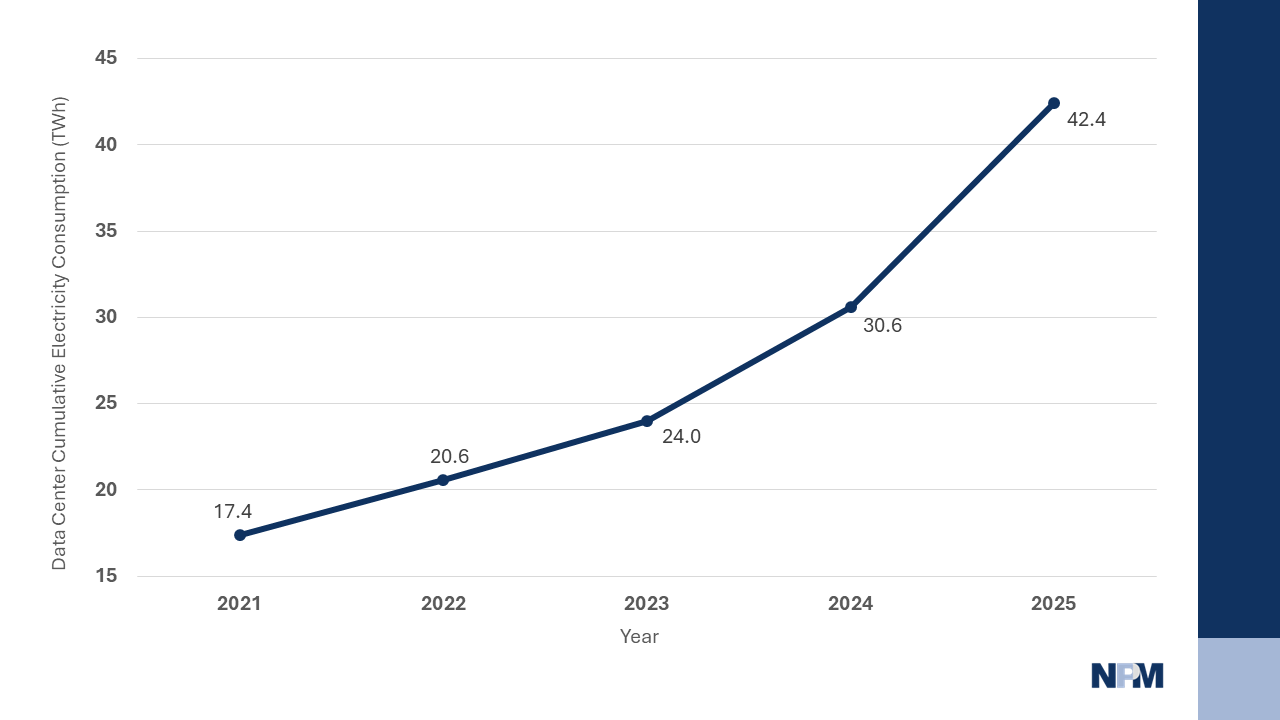
Graph 1 – Annual electricity consumption of Google’s data center portfolio between 2021 and 2025.
Although numbers of this size are hard to comprehend, comparing this figure with the electricity consumption of various countries certainly helps to quantify them.
According to data produced by think tank Ember, if the cumulative electricity capacity of Google’s data center portfolio was a country, it would rank 62nd in the world.
This would put Google’s data center portfolio ahead of countries such as Denmark and Ecuador when it comes to annual electricity consumption in 2025, who each consumed 40.7TWh and 36.6TWh, respectively, and on par with New Zealand, which consumed 43.3TWh.
Electricity source
Google chose to combine its data center electricity consumption with that from its offices and “other facilities”, meaning the company’s global electricity consumption for 2025 came to 43.6 TWh.
Although this figure of 43.6TWh accounts for the entirety of Google’s global operations in 2025, the electricity demand of its data center portfolio accounts for over 97% of this figure – meaning this analysis below is still highly relevant to the supply of its data centers.
In 2025, Google stated that it met this 43.6 TWh demand using 100% renewable energy from the three sources outlined in Graph 2.
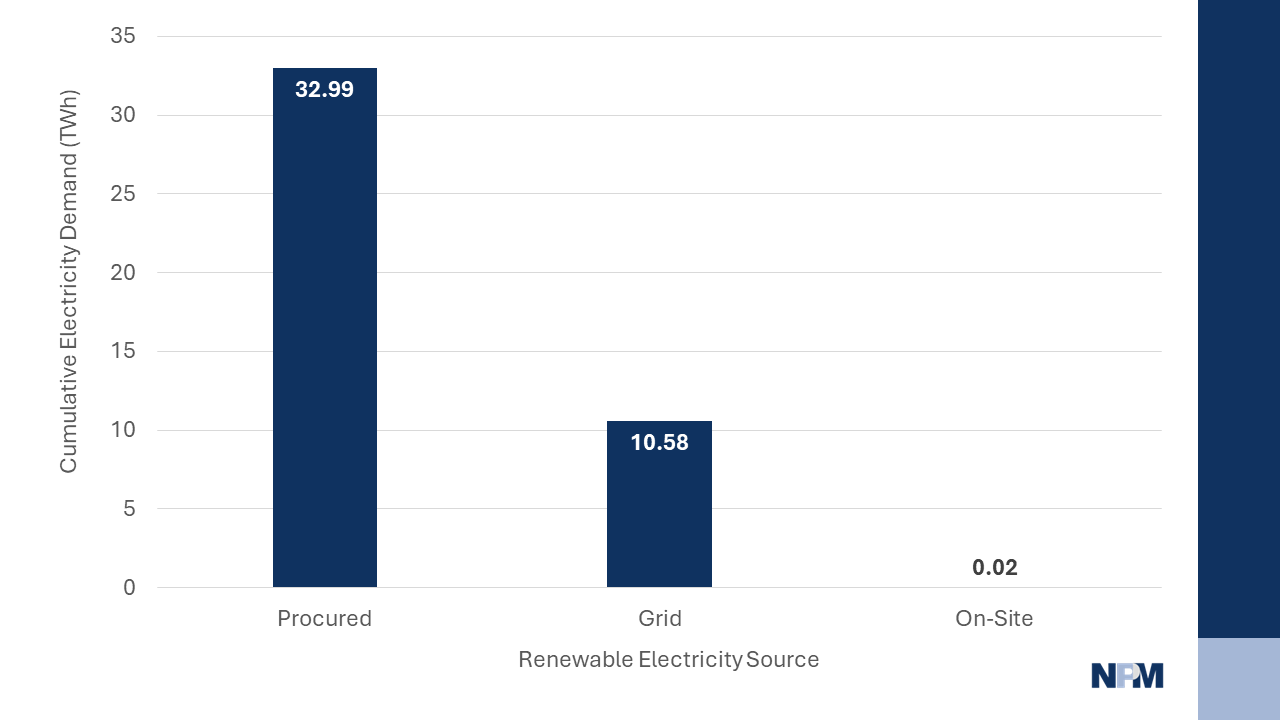
Graph 2 – The source of Google’s electricity which it used to power its business operations during 2025.
“Procured renewable electricity” accounts for the largest proportion of this total, which Google classifies as electricity coming from “PPAs and other renewable energy agreements.”
This category includes electricity matching, which Google continues to rely upon in meeting this demand. Since 2017, Google has claimed to match 100% of electricity use with renewable energy through its “24/7 Carbon-Free Energy (CFE)” strategy.
Instead of offsetting electricity usage annually, Google states that it matches its electricity usage every hour, for every electricity grid that it operates in.
By avoiding the more traditional annual matching method, Google states that it avoids relying upon “power generated by fossil fuels during times when, or in places where, carbon-free generation isn’t available.”
Despite a growing demand for electricity, Google has maintained the same proportional split between procured sources versus on-site and from the grid, as illustrated in Graph 3.
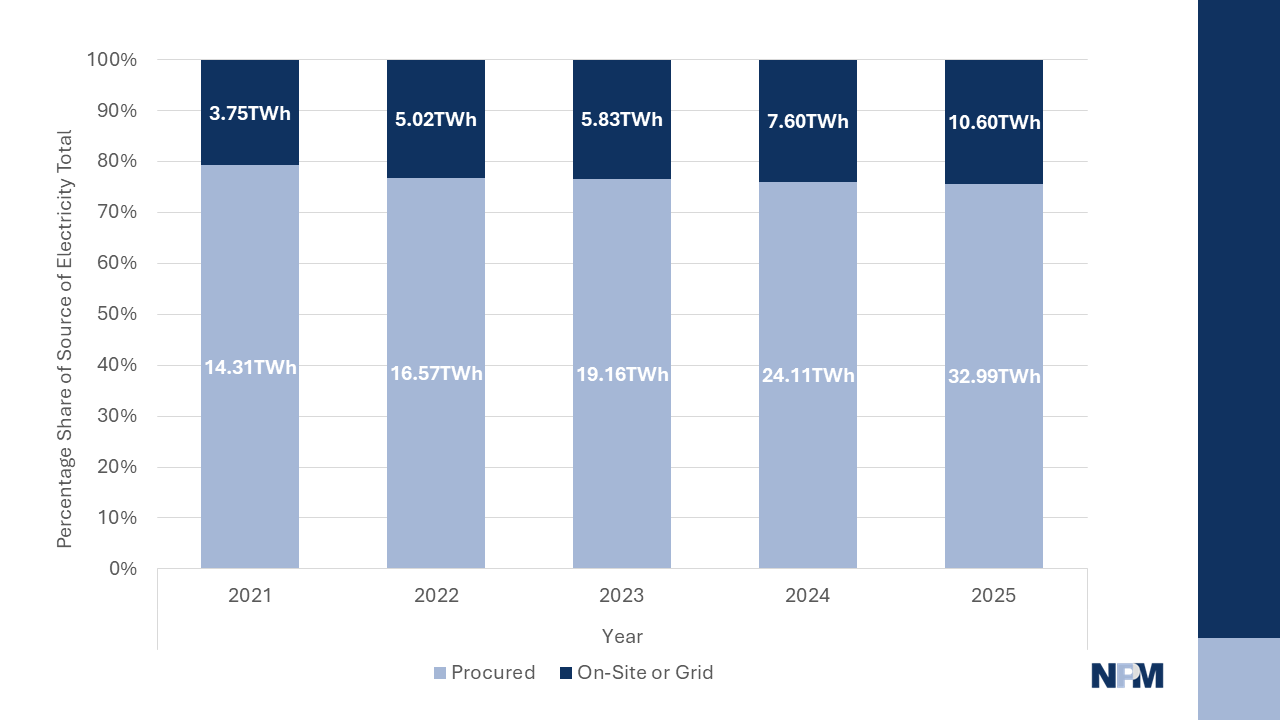
Graph 3 – The percentage split of Google’s electricity source between 2021 and 2025.
With such a huge demand for electricity – coupled with the company’s desire to move away from powering its portfolio with fossil fuels – Google has become one of the world’s largest corporate buyers of renewable energy.
In 2025 alone, the company claims to have signed 12 GW of new clean energy agreements, taking its total global cumulative renewable energy capacity above 34 GW.
The largest proportion of this spans North America, which exceeds 29 GW across 148 different projects, followed by Europe where Google has signed agreements with 75 clean energy projects with a cumulative capacity exceeding 4 GW.
Following Google’s acquisition of Intersect Power, future iterations of this report should highlight the company’s increased usage of on-site generation to power its data centers. As highlighted in Graph 2, on-site generation accounted for only 0.02 TWh of its electricity supply in 2025, representing a tiny 0.05% of its total 43.6 TWh.
Although Google hasn’t announced a similar sort of deal in Europe, it is continuining to procure renewable energy throughout the continent. As reported by NPM in January this year, Google extended a German partnership with multinational energy company Engie.
Under the arrangement, Google will purchase electricity from a number of new renewable energy projects developed and operated by Engie.
Emissions on the rise
Investments into renewable energy weren’t the only thing on the rise in 2025, with Google’s overall greenhouse gas emissions also rising by 18% last year when compared to 2024.
The company’s overall emissions in 2025 were 80% made up of scope three emissions, which are those that occur from indirect upstream and downstream activities occurring in the organization’s value chain.
Google’s scope three emissions rose to 11.6 million tCO2e in 2025, representing a 25% increase when compared to 2024 and a 62% increase compared to 2019. Graph 4 below illustrates this growth in emissions since 2020.
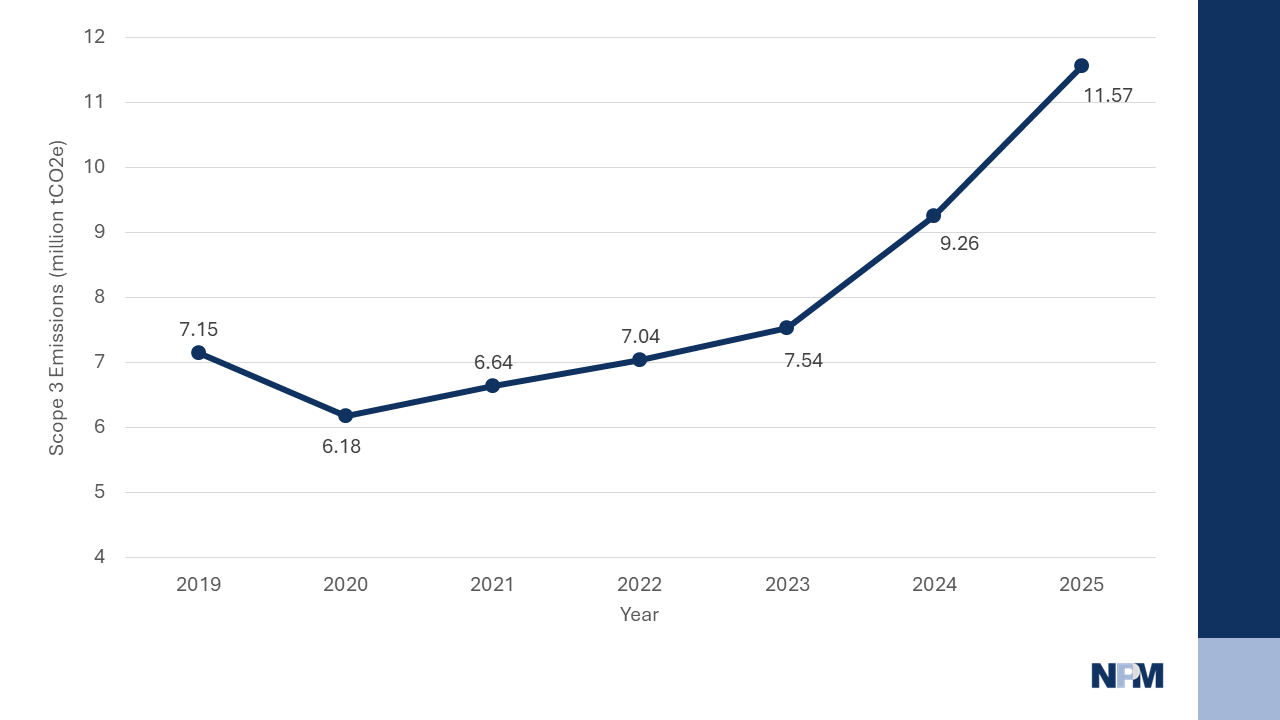
Graph 4 – Google’s annual scope three emissions between 2019 and 2026.
“[The increase] is primarily due to technical infrastructure manufacturing and their logistics as well as data center construction,” explained Google, who revealed that roughly half of its scope 3 emissions in 2025 were generated through electricity use across its supply chain.
Google still aims to reach net-zero emissions across all of its operations and value chain by 2030, something which it says is “more complex and challenging than ever.”
“[Scope 3] emissions are further removed from our direct control and therefore [require] more complex, long-term interventions to make significant progress,” explained the company.